
This post may contain affiliate links. If you use these links to buy something we may earn a commission at no extra cost to you. Thank you for your support!
A person can love your Instagram posts, download your free checklist, and still never inquire about your service. That gap is exactly what a sales funnel is designed to close. This beginner guide to sales funnels will help you understand the path between attention and payment, whether you want to use funnels to grow your own freelance business or offer funnel building as a paid service.
A funnel is not a complicated tech stack reserved for big brands. At its simplest, it is a planned customer journey. Someone discovers you, sees why your offer matters, gains confidence that you can help, and takes the next logical step. For a freelancer, that might mean booking a discovery call. For a course creator, it could mean joining a waitlist or buying a low-ticket product.
The goal is not to pressure people into buying. It is to make the next step obvious for people who are already looking for a solution.
What Is a Sales Funnel?
A sales funnel is the series of messages, pages, and actions that guides a potential customer from first contact to a desired conversion. That conversion can be a sale, but it can also be an email signup, a consultation booking, a proposal request, or an application.
Think about a small business owner who needs help with email marketing. They find a helpful post explaining why their welcome emails are underperforming. The post offers a free welcome email audit checklist. After downloading it, they receive a few emails with useful examples, then an invitation to book an audit or hire you to write the sequence. That is a funnel.
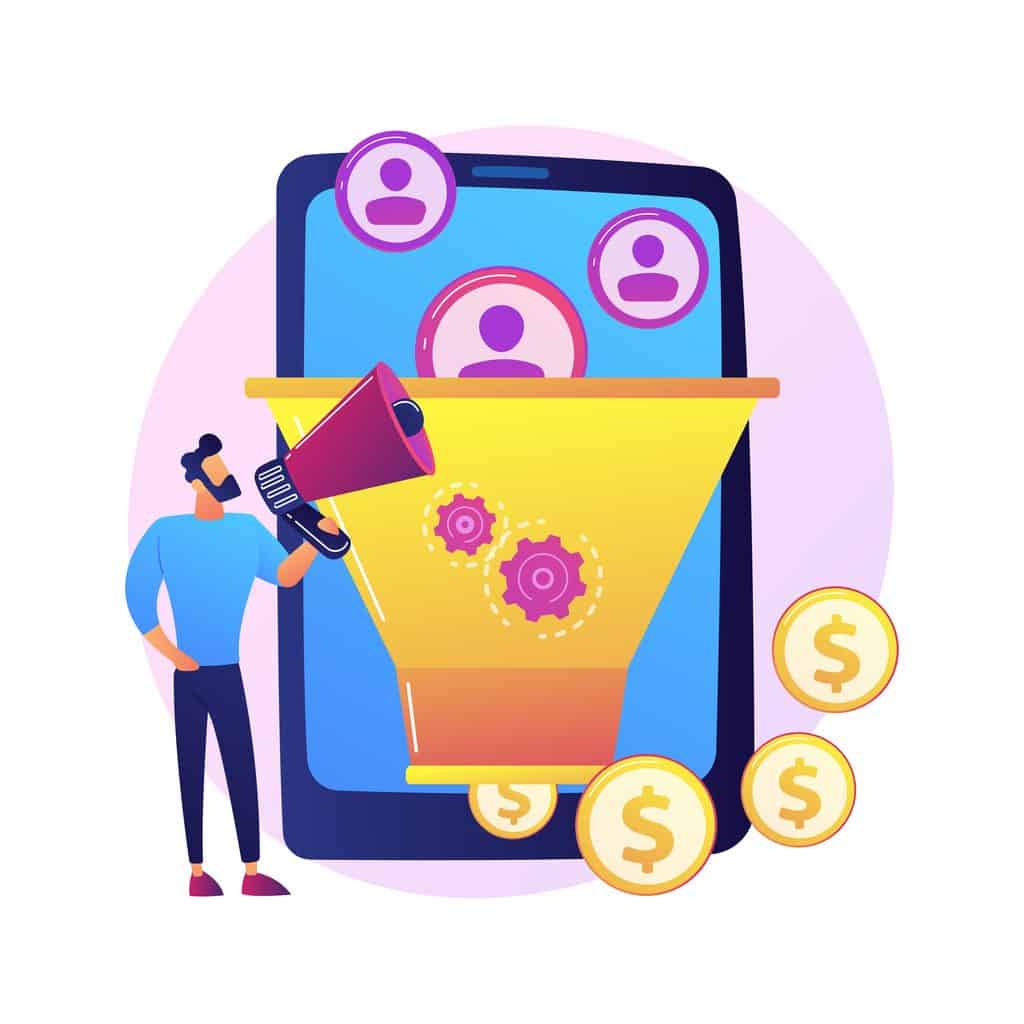
The funnel is not the landing page alone. It includes the traffic source, the offer, the follow-up, and the decision point. If one piece is unclear, conversion rates can drop even when the rest looks polished.
For freelancers, funnels are valuable in two ways. First, they help you generate leads without manually explaining your offer from scratch every time. Second, funnel strategy is a service you can sell to coaches, ecommerce brands, consultants, local businesses, and course creators.
That dual value, using funnels yourself and selling them as a service is exactly why this beginner guide to sales funnels is worth working through slowly rather than skimming.
The Four Stages of a Simple Sales Funnel
Most funnels can be understood through four stages: awareness, interest, decision, and action. You do not need a separate page for every stage, but you do need content and messaging that serve each one.
Awareness: Help the right people find you
At the awareness stage, people know they have a problem or a goal, but they may not know your business exists. A virtual assistant’s ideal client may feel overwhelmed by admin work. A web designer’s lead may know their site looks outdated but be unsure what to fix first.
Awareness content earns attention by being useful. Blog posts, short-form video, LinkedIn posts, search ads, guest appearances, and referrals can all bring people into the top of your funnel. The best channel depends on where your buyers already spend time. Search-based content can compound over time, while outreach can create conversations faster. There is room for both.
Do not try to attract everyone. A message like “I help businesses grow” is too broad to create much momentum. “I build email funnels for coaches selling group programs” gives the right person a reason to keep reading.
Interest: Give them a reason to raise their hand
Interest happens when a visitor exchanges a small amount of commitment for more value. Usually, that means giving you an email address in return for a useful resource, mini training, template, quiz, or discount.
Your lead magnet should solve a narrow, immediate problem. A generic ebook titled “50 Marketing Tips” may sound nice, but a “Five-Email Welcome Sequence Template for Coaches” is easier to understand and use. Specific wins build trust faster.
The page promoting your lead magnet should answer three questions quickly: Who is this for? What will they get? What result can it help them create? Keep the form simple. Asking for a name and email is often enough at this stage.
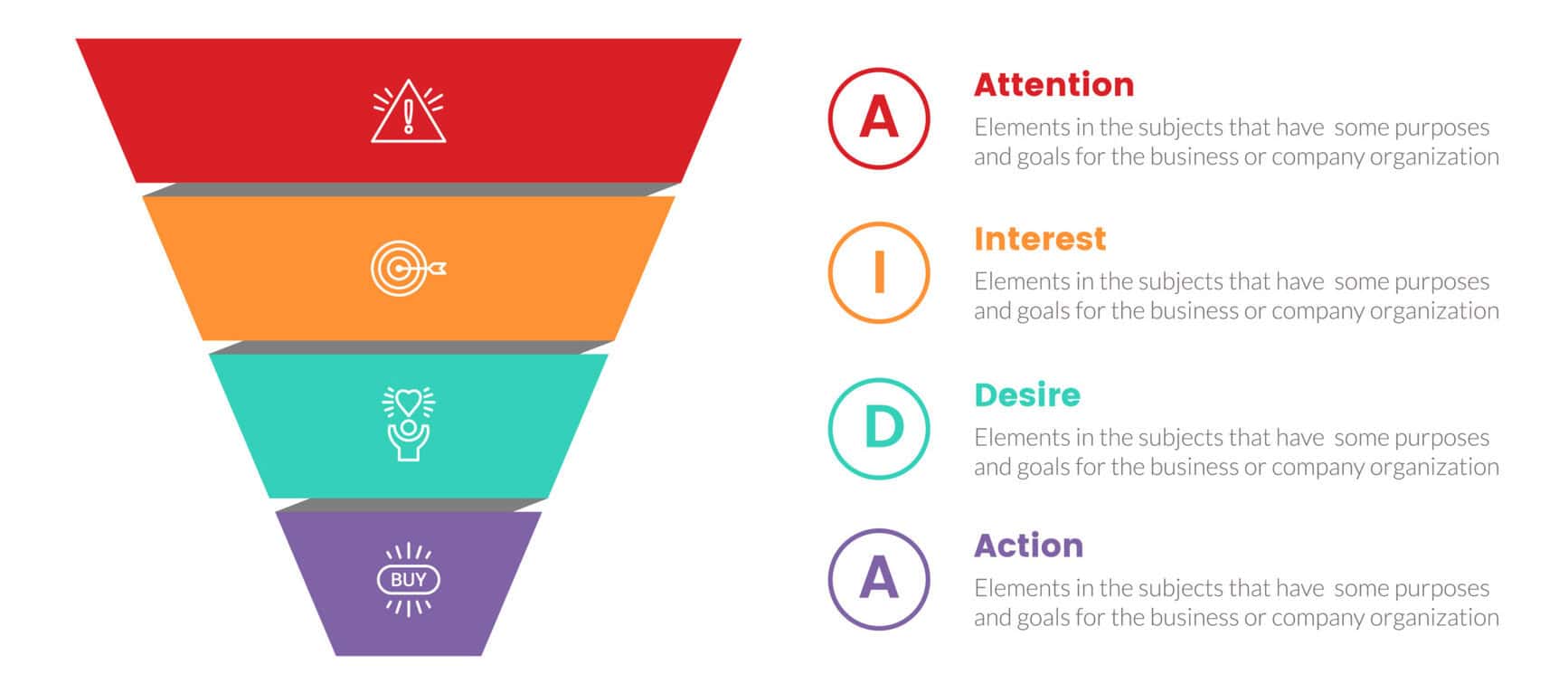
| Funnel stage | What the prospect is doing | Freelancer’s goal | Example |
|---|---|---|---|
| Awareness | Discovering the problem or your business | Get the right person’s attention | Blog post, LinkedIn post, short video |
| Interest | Looking for useful information | Capture the lead | Checklist, template, mini training |
| Decision | Deciding whether to trust you | Build confidence | Emails, testimonials, case studies |
| Action | Ready to take the next step | Make conversion easy | Book a call, buy, apply, reply |
Decision: Build confidence before the offer
A new subscriber is interested, not automatically ready to buy. This is where email follow-up and proof do the heavy lifting. Share practical advice, show examples of your process, address common concerns, and explain the cost of leaving the problem unsolved.
For example, a freelance copywriter might send three emails after someone downloads a sales page checklist. The first helps them identify their biggest conversion leak. The second breaks down a client example. The third invites them to book a paid messaging audit.
An email platform like ActiveCampaign lets you automate these follow-up sequences so each new subscriber gets the right message at the right time, without you sending emails manually. For a simpler, budget-friendly start, MailerLite handles this well too.
This is also where testimonials, portfolio samples, before-and-after results, and clear positioning matter. You are helping the buyer answer, “Can this person solve my specific problem?” Do not hide your offer until the tenth email. Mention it naturally when it fits the conversation.
Action: Make the next step easy
Action is where the prospect buys, books, applies, or replies. Too many funnels lose people here because the call to action is vague or the process feels like work.
If you want calls, say exactly what happens on the call and who it is for. If you sell a service package, explain the deliverables, timeline, investment range, and expected outcome. A buyer should not have to hunt for basic information.
One page should usually have one primary action. A landing page that asks visitors to subscribe, follow on three platforms, read five articles, and book a call creates unnecessary choices. Pick the action that matches the visitor’s level of readiness.
How to Build Your First Funnel Without Overcomplicating It
The fastest route is to build around one offer for one audience. Do not begin with five lead magnets and an elaborate 20-email automation. Start with a simple funnel that you can explain in one sentence.
The whole point of a beginner guide to sales funnels is to keep this first build simple, because a clear one-offer funnel teaches you more than an elaborate system you never finish.
For example: “I help online coaches improve their launch emails. They download my launch email checklist, receive three helpful emails, and can book a paid email audit.” That is enough to build.
First, define the end conversion. Is it a $150 audit, a discovery call for a $2,000 service package, or a digital product sale? Your answer affects every earlier step. A high-ticket service often needs more trust-building and a call, while a lower-priced product may work well with a direct checkout page.
Next, identify the problem that leads naturally to your paid offer. Your free resource should not be random. If you sell social media management, a content calendar template is relevant. If you sell bookkeeping, a cash-flow tracker may be a better fit than a general productivity guide.
Then create the minimum assets: a landing page, a thank-you page, a short email sequence, and a sales or booking page. Use simple tools you can manage confidently. A dedicated funnel builder like ClickFunnels lets you create the landing page, thank-you page, and checkout in one place, so your first funnel comes together without stitching multiple tools together. If you want a lower-cost way to start, Systeme IO offers funnels and email on a free-friendly plan. Fancy software cannot rescue unclear messaging, lah. A clean page, useful offer, and consistent follow-up will outperform a complicated funnel nobody understands.
Finally, choose one traffic source and commit to it long enough to learn. If you rely on LinkedIn, publish helpful posts that lead to your resource and start relevant conversations. If you use search content, create pages that answer high-intent questions your potential clients ask. If you run ads, test with a controlled budget and track results closely.
What to Measure Before You Redesign Everything
Funnels improve through evidence, not guesswork. You do not need advanced analytics at the beginning, but you should monitor where people stop moving forward.
Watch your landing page conversion rate, email open rate, email click rate, call booking rate, show-up rate, and sales rate. These numbers tell different stories. A low opt-in rate may mean the lead magnet or page message is weak. Good opt-ins but few calls may mean the follow-up lacks a clear offer. Plenty of calls with few sales can point to targeting, pricing, or sales conversations.
Avoid judging a funnel after 20 visitors. Small data sets can be misleading. At the same time, do not wait forever for perfect data. Review the journey regularly, listen to the questions prospects ask, and adjust one meaningful variable at a time.
A good first test might be changing the headline to speak to a more specific outcome. Another might be replacing a vague button like “Learn More” with “Get the Welcome Email Template.” When you change everything at once, you cannot tell what made the difference.

Common Funnel Mistakes Freelancers Can Avoid
The first mistake is building the funnel before validating the offer. If people do not want the service, more pages will not solve the problem. Speak with real prospects, review your past client work, and pay attention to the language buyers use.
The second is making the free offer bigger than the paid one. A lead magnet should create a useful quick win, not deliver every piece of your complete service. Give people progress, then show them how personalized support, implementation, or strategy takes them further.
The third is treating automation like a replacement for relationships. Automated emails save time, but prospects still want to feel understood. Write like a real person. Invite replies. Use the questions you receive to sharpen your content and offers.
A sales funnel becomes powerful when it reflects a real customer journey rather than a collection of trendy pages. Start small, pay attention to what your audience does, and improve one step at a time. That is how a simple funnel can become an asset that helps you work from anywhere, serve better clients, and build income that does not depend on posting and hoping every single day.