

This post may contain affiliate links. If you use these links to buy something we may earn a commission at no extra cost to you. Thank you for your support!
A freelance platform should help you spend more time delivering great work and less time chasing payments, sorting admin, or competing in a race to the bottom. That is the real question behind Upwork vs Contra freelancing. Both can bring opportunities to your inbox, but they attract clients differently and reward different ways of building a service business.
If you are a virtual assistant, copywriter, designer, video editor, marketer, developer, or consultant, you do not need to pledge loyalty to one platform forever. You need to understand where your offer has the best chance of being seen, trusted, and purchased at a price that makes sense.
Upwork vs Contra Freelancing at a Glance
Upwork is a large, established freelance marketplace built around job posts, proposals, contracts, time tracking, and payment protection. Contra is a newer, portfolio-forward platform where freelancers can showcase services, receive leads, send proposals, sign contracts, and collect commission-free payments.
Here is the practical difference: Upwork gives you access to volume. Contra gives you more room to present yourself like a specialist brand. Neither is automatically better. Your service, positioning, experience level, and client acquisition plan matter more.
| Feature | Upwork | Contra |
| Best known for | Large job marketplace and structured hiring | Portfolio-led discovery and independent professional branding |
| Client acquisition | Freelancers apply to posted jobs | Clients discover profiles, or freelancers share their Contra presence directly |
| Freelancer fees | Service fees may apply and vary by contract | Commission-free payments for freelancers, though payment processing or plan-related costs may apply |
| Competition | High, especially for broad beginner services | Smaller marketplace, with less job-post volume |
| Portfolio experience | Useful, but proposal and work history carry major weight | Central to the platform experience |
| Contract and payment tools | Built into the marketplace workflow | Built-in proposals, contracts, invoices, and payments |
| Strong fit for | Freelancers who can write targeted proposals consistently | Freelancers building a polished specialist brand and direct-client pipeline |
Platform policies and pricing can change, so always check the current terms before setting your rates or promising a client a particular payment process.
Choose Upwork When You Need More Conversations
Upwork’s biggest advantage is simple: there are many clients posting jobs every day. That volume can be valuable when you are refining an offer, filling gaps in your calendar, or entering a new niche.
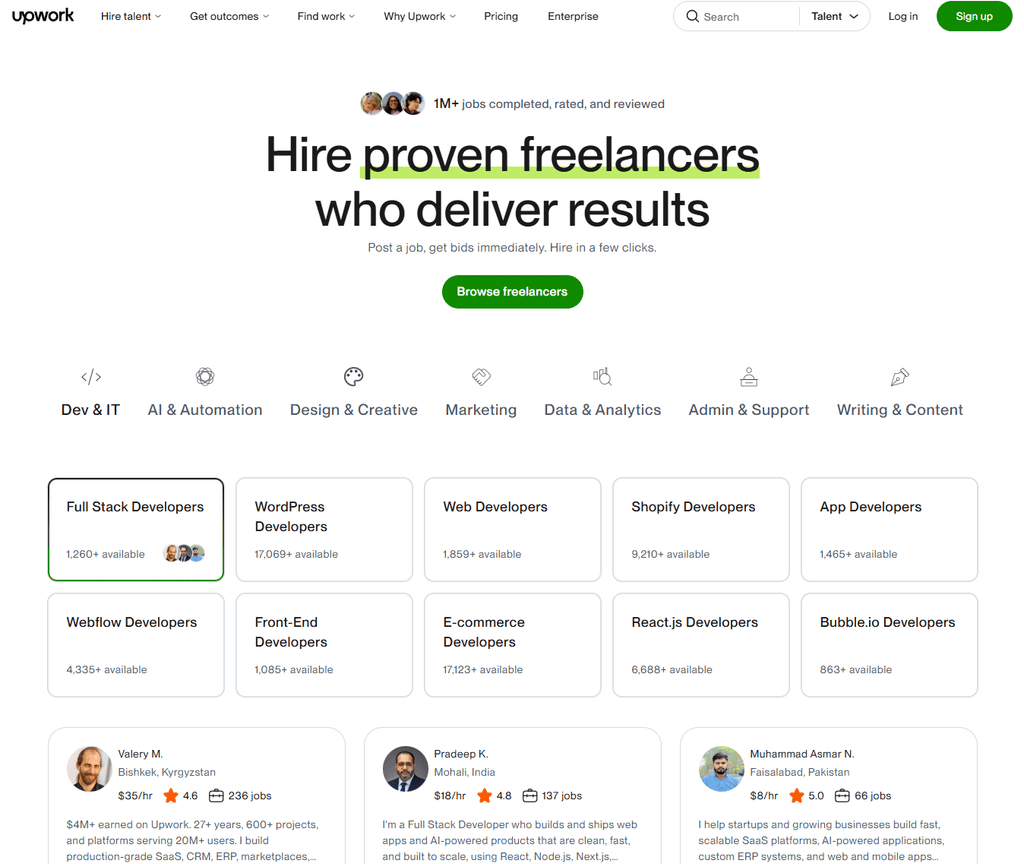
A capable email marketer, for example, can search for projects related to welcome sequences, campaign strategy, Klaviyo setup, or newsletter management. A video editor can focus on short-form reels, YouTube editing, or podcast clips. You are not waiting for someone to discover you. You can actively create opportunities by applying.
That does not mean sending 30 copy-paste proposals before breakfast, lah. The freelancers who get momentum on Upwork treat proposals as mini sales conversations. They read the brief, identify the business goal behind the task, and show the client how they would approach it.
The trade-off: competition and platform dependence
The same job volume that makes Upwork useful also brings competition. Broad searches such as “virtual assistant” or “social media manager” can put you beside hundreds of freelancers with similar claims. If your profile says only that you are hardworking, reliable, and passionate, clients have little reason to choose you.
Specific positioning changes the game. “I help coaches turn weekly videos into LinkedIn content and email newsletters” is far easier to buy than “I do social media.” It also makes your proposal more focused because you can speak to outcomes, not just tasks.
Upwork works best when you can protect dedicated time for prospecting. You need to review listings, qualify clients, write thoughtful proposals, follow up where appropriate, and keep your profile proof current. It can be a lead source, but it should not become your entire business model.
Choose Contra When Your Portfolio Does More Selling
Contra is especially appealing for freelancers whose work is visual, strategic, or easy to package. Designers, brand strategists, web developers, copywriters, content creators, marketers, and consultants can use it to show the quality of their thinking before a discovery call even happens.
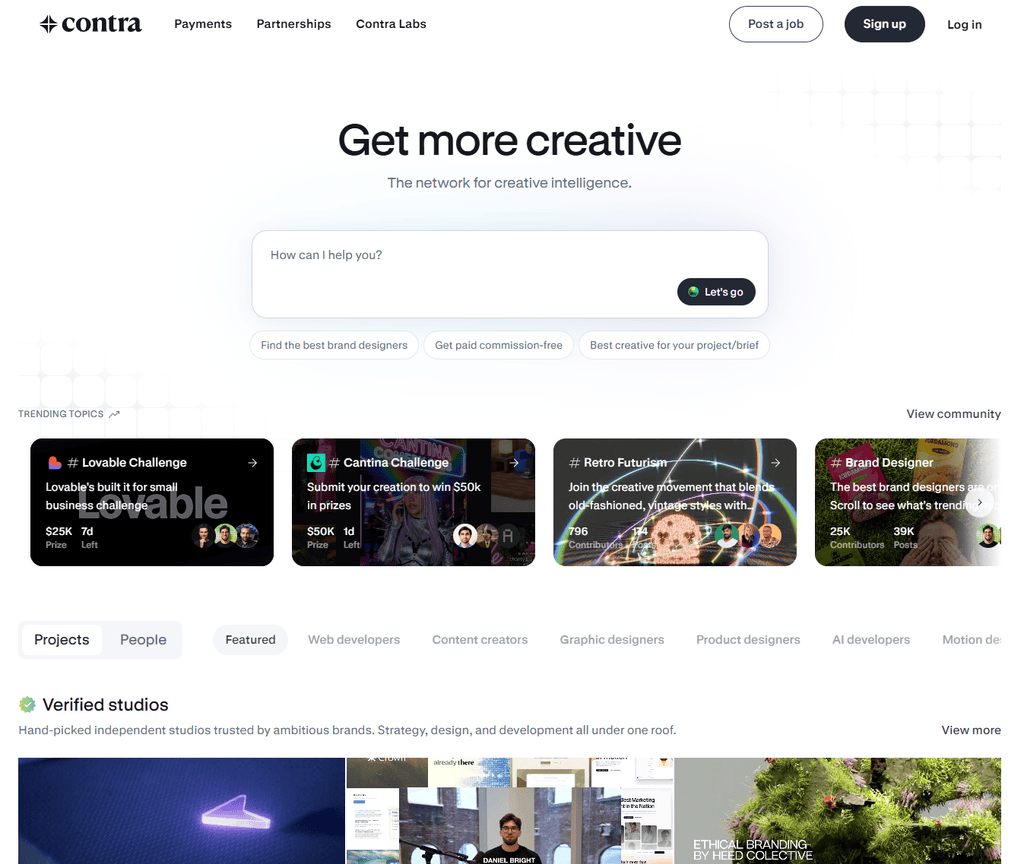
Instead of relying mainly on a job application, you can build a profile that makes your work feel like a real business. Add selected projects, explain the problem and result, list services, collect recommendations, and direct potential clients to one professional home for proposals and payment.
For a freelance website designer, that might mean featuring three projects with before-and-after context: a clearer site structure, stronger messaging, a faster launch process, or more qualified inquiries. That tells a better story than a gallery of pretty screenshots.
The trade-off: fewer posted jobs do not mean fewer responsibilities
Contra can support your client experience, but it will not replace marketing. If you wait passively for inbound leads, results may feel slow, particularly when your profile is new.
The stronger play is to use Contra as part of your visibility system. Share your profile when networking on LinkedIn, following up after referrals, pitching warm leads, or speaking with people in online communities. It gives prospects a clean place to view proof and move into a professional workflow.
That makes Contra a particularly good fit for freelancers who want to own more of their reputation. You are building an asset that supports referrals, direct outreach, social content, and repeat business rather than relying only on a marketplace search algorithm.

Fees Matter, But Your Net Income Matters More
Many freelancers compare platforms by looking only at service fees. That is understandable, especially when you are working toward your first $1,000 month or protecting a growing agency margin. But the better calculation is net income after time, fees, revisions, and client acquisition effort.
Imagine two $1,000 projects. On one platform, you pay a fee but land the project after one strong proposal. On another, the transaction cost is lower, but you spend weeks creating content and networking before the client says yes. Neither path is wrong. The more profitable option depends on your conversion rate and the value of the client relationship.
Also consider what each platform handles for you. Contracts, milestone payments, invoicing, and dispute processes can reduce admin work and create more confidence for newer clients. Direct billing may give you greater control, but it also asks you to manage your own terms, payment reminders, and systems.
Price your service with the full delivery cost in mind. A lower platform fee does not fix underpricing. If you charge $150 for work that takes ten skilled hours, the issue is your offer and rate, not your payment processor. That distinction is really the crux of Upwork vs Contra freelancing: the platform affects your fees, but your offer and rate decide your actual take-home pay.

How to Build a Smart Two-Platform Strategy
You do not have to choose one side of Upwork vs Contra freelancing immediately. Many freelancers use both with different jobs to do.
Use Upwork for proactive lead generation. Create saved searches around a tight service offer, apply only to projects that match your scope and minimum rate, and track which proposal angles receive replies. This gives you market feedback fast.
Use Contra as your professional storefront. Build a profile around the transformation you provide, not a long menu of unrelated tasks. Include work samples, clear service packages, testimonials where permitted, and a short explanation of who you help.
Then keep your business bigger than either platform. Ask happy clients for referrals. Build a simple portfolio of case studies. A tool like Canva Pro makes it quick to turn those case studies into a clean, shareable one-pager, useful whether you’re linking it in an Upwork proposal or a Contra profile. Develop an email list or social presence if it fits your niche. Learn to run discovery calls and write proposals that connect your work to revenue, leads, time saved, or customer experience.
A platform can introduce you to clients. Your skills, communication, and results are what turn a one-off project into repeat work.
What Each Freelancer Type Should Consider
Beginners may find Upwork useful because it shows real client language. Read job posts in your category and notice what buyers ask for, what tools they mention, and what outcomes they value. Logging those observations in a simple Notion doc turns casual browsing into real market research you can revisit when you sharpen your offer later. You can use that research to sharpen your service offer, even before you win your first project.
Experienced freelancers may prefer Contra’s brand-building potential, especially if they already get leads through referrals, LinkedIn, content, partnerships, or an agency network. A polished portfolio and easy payment workflow can make the buying process feel more premium.
For specialists, the decision often comes down to proof. If you have strong case studies and a clear niche, Contra can help that proof shine. If you are entering a niche and need more sales conversations to build proof, Upwork’s job marketplace may give you more reps.
In the end, Upwork vs Contra freelancing isn’t a permanent choice, it’s just today’s best entry point into a business you keep building no matter which platform you log into. The best platform is the one that supports the next stage of your business, not the one with the loudest online opinions. Pick one primary channel, give it a focused 60- to 90-day effort, measure inquiries and revenue, then adjust. Build skills you own, charge for outcomes you can stand behind, and create a freelance business that can travel with you wherever you want to work.