

This post may contain affiliate links. If you use these links to buy something we may earn a commission at no extra cost to you. Thank you for your support!
A lot of freelancers spend hours pitching, following up, and refreshing job boards, then wonder why client flow still feels so inconsistent. SEO for freelancers gives you a different path. Instead of chasing every lead, you build a web presence that helps the right clients find you when they are already searching for what you do.

That matters whether you are a copywriter, web designer, bookkeeper, virtual assistant, ads specialist, or SEO provider yourself. If you sell a digital service, search can become one of the few marketing channels that keeps working while you are on client calls, finishing deadlines, or taking a proper break. And no, you do not need to turn into a full-time blogger to make it work.
What SEO for freelancers actually means
At its core, SEO for freelancers is about making your website easier for search engines to understand and easier for buyers to trust. You want your service pages, portfolio pieces, and educational content to show up when potential clients search for help.
For a freelancer, that usually means ranking for commercial-intent searches like “email copywriter for ecommerce,” “freelance web designer for coaches,” or “bookkeeping services for small businesses.” It can also mean ranking for problem-aware topics that bring in warmer leads, like articles answering the exact questions your ideal client asks before they hire.
This is where many freelancers get off track. They target broad keywords with huge traffic numbers, then attract readers who will never buy. More traffic is not the goal. Better-fit traffic is.
Why SEO can beat constant outreach
Outreach still has a place. Platforms still have a place. Referrals are amazing when they come in. But all of those channels depend on ongoing effort or someone else controlling the platform.
SEO is slower at the start, but it compounds. A strong service page can bring in leads for months. A useful article can introduce your brand to people before they are ready to hire, then pull them back later when they are. If your business goal is more freedom, less feast-or-famine stress, and a pipeline that does not disappear the minute you stop posting, SEO is worth building.
There is a trade-off, of course. SEO usually takes longer than sending ten pitches today. If you need clients this week, it should not be your only strategy. But if you want a business that grows past constant hustling, it is one of the smartest assets you can build.
Start with pages that can actually bring revenue
If you are serious about SEO for freelancers, your first move is not publishing twenty random blog posts. It is building the pages most likely to turn visitors into inquiries.
Your homepage should clearly say what you do, who you help, and what outcome you deliver. Keep it simple. If someone lands there in five seconds, they should know whether they are in the right place.
Then create dedicated service pages. One page for each core offer is usually the better move than stuffing everything onto one generic services page. A freelance copywriter might have separate pages for email copywriting, sales pages, and ad copy. A designer might have separate pages for brand design, landing pages, and presentation design.
This matters because search intent matters. Someone searching for a sales page copywriter is not looking for a vague “content services” page. The closer your page matches the search, the better your chances of ranking and converting.

Portfolio pages can help too, especially if you write them with context. Do not just upload screenshots and call it a day lah. Explain the client problem, your process, and the result. Those details help both search visibility and buyer confidence.
How to choose keywords without wasting time
Freelancers often make keyword research more complicated than it needs to be. You are not trying to build a giant media company. You are trying to attract the right buyers.
Start with your services, your niche, and your client type. A few examples:
- freelance email copywriter for Shopify brands
- Pinterest manager for bloggers
- web designer for therapists
- virtual assistant for real estate agents
- SEO consultant for SaaS startups
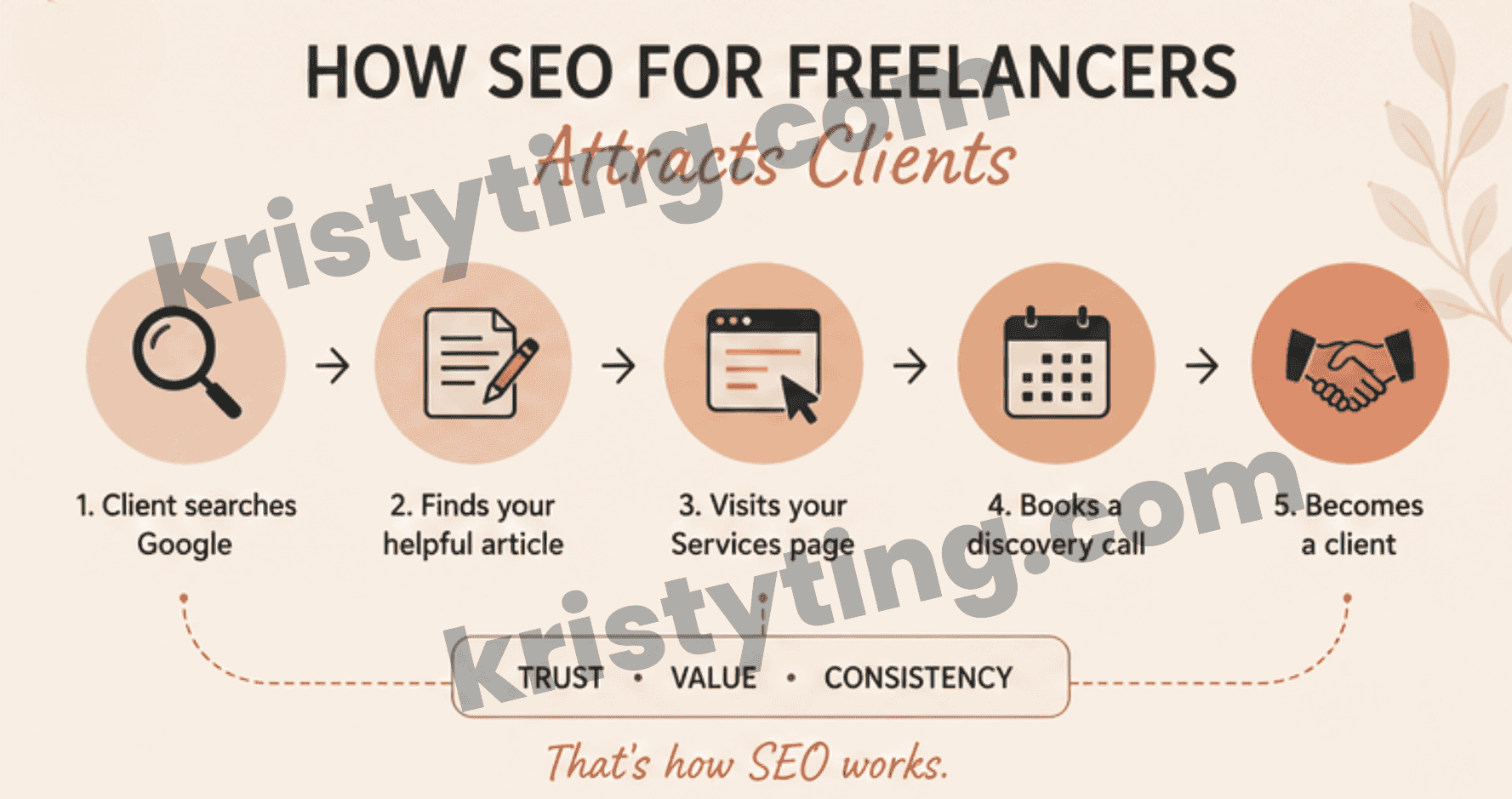
These may have lower search volume than broad terms, but they are usually far more valuable. The person typing them already knows what they want.
You can also look for location-based terms if geography matters to your positioning. That could be “freelance web designer in Singapore” or “SEO consultant for Malaysian startups.” This works especially well if you want local businesses, regional authority, or less competition.
Then add supporting content around related questions. If your service is email marketing, topics like pricing, strategy mistakes, platform comparisons, or campaign examples can attract people who are researching before they hire.
A simple rule helps here: if a keyword could realistically lead to a paid project, it is worth considering. If it only brings curious readers with no buying intent, be selective.
If keyword research feels overwhelming, tools like RankIQ can help you discover lower-competition keyword opportunities and generate content briefs based on what people are already searching for. It won’t replace good SEO strategy, but it can save a lot of research time when you’re planning blog content.
The best content strategy for freelancers
Most freelancers do not need a massive blog. They need a tight content ecosystem.
Think of it in three layers. First, your money pages, which are your service pages. Second, your proof pages, like case studies and portfolio examples. Third, your trust-building content, which answers questions your ideal clients are already searching.
That trust-building content should connect back to your services naturally. For example, a freelance Facebook ads specialist could write about average ad management pricing, signs your ad account needs an audit, or common mistakes ecommerce brands make with retargeting. A VA could write about tasks to outsource first, SOP tools, or signs a founder needs admin support.
This approach works because it mirrors the buyer journey. Some people are ready now. Some are comparing options. Some are not ready yet but are learning. Good SEO lets you meet all three.
On-page SEO that matters most
You do not need to obsess over every tiny ranking factor. Focus on the basics that improve clarity.
Use one main keyword per page and place it naturally in the title, headline, opening paragraph, and a few subheadings where relevant. Write a meta description that makes a real person want to click. Use clean URLs. Add image alt text where appropriate.
More importantly, write like a human expert. Your page should be specific. Mention industries you serve, tools you use, deliverables clients get, and outcomes you aim for. Thin, generic copy does not help your rankings or your conversions.
Internal structure matters too. Break up long walls of text, use clear H2s and H3s, and make it obvious what action you want the reader to take next. If someone has to hunt for your contact form or wonder whether you are available for work, that is a fixable problem.
What helps freelance websites rank faster
Authority is often the missing piece. New freelance websites usually do not rank overnight because search engines want signals that you are credible.
One way to build that is through specificity. Niche positioning can do more for rankings than trying to sound like you serve everyone. “Copywriter for health coaches” is easier to trust and rank than “freelance writer for all businesses.”
Another is publishing proof. Case studies, testimonials, process pages, and detailed service explanations all support trust. If you have been featured on podcasts, spoken in communities, or contributed guest content, those mentions can help too.
Technical basics also matter. Your site should load reasonably fast, work well on mobile, and be easy to crawl. You do not need a fancy setup, but you do need a functional one.
Common SEO mistakes freelancers make
The biggest mistake is treating SEO like a traffic game instead of a client acquisition strategy. Ten qualified visitors can be worth more than a thousand random ones.
The second is hiding behind pretty branding with no search intent. A clever headline might sound nice, but if it never says what you actually do, both buyers and search engines will struggle.
The third is giving up too early. SEO often takes a few months to show movement, especially on a new site. That does not mean it is failing. It means you are building an asset, not buying instant attention.
And yes, there is such a thing as overdoing it. If you stuff keywords into every sentence, publish low-value articles just to hit a schedule, or create content that sounds robotic, you will make your site worse, not better.
A realistic SEO plan for freelancers
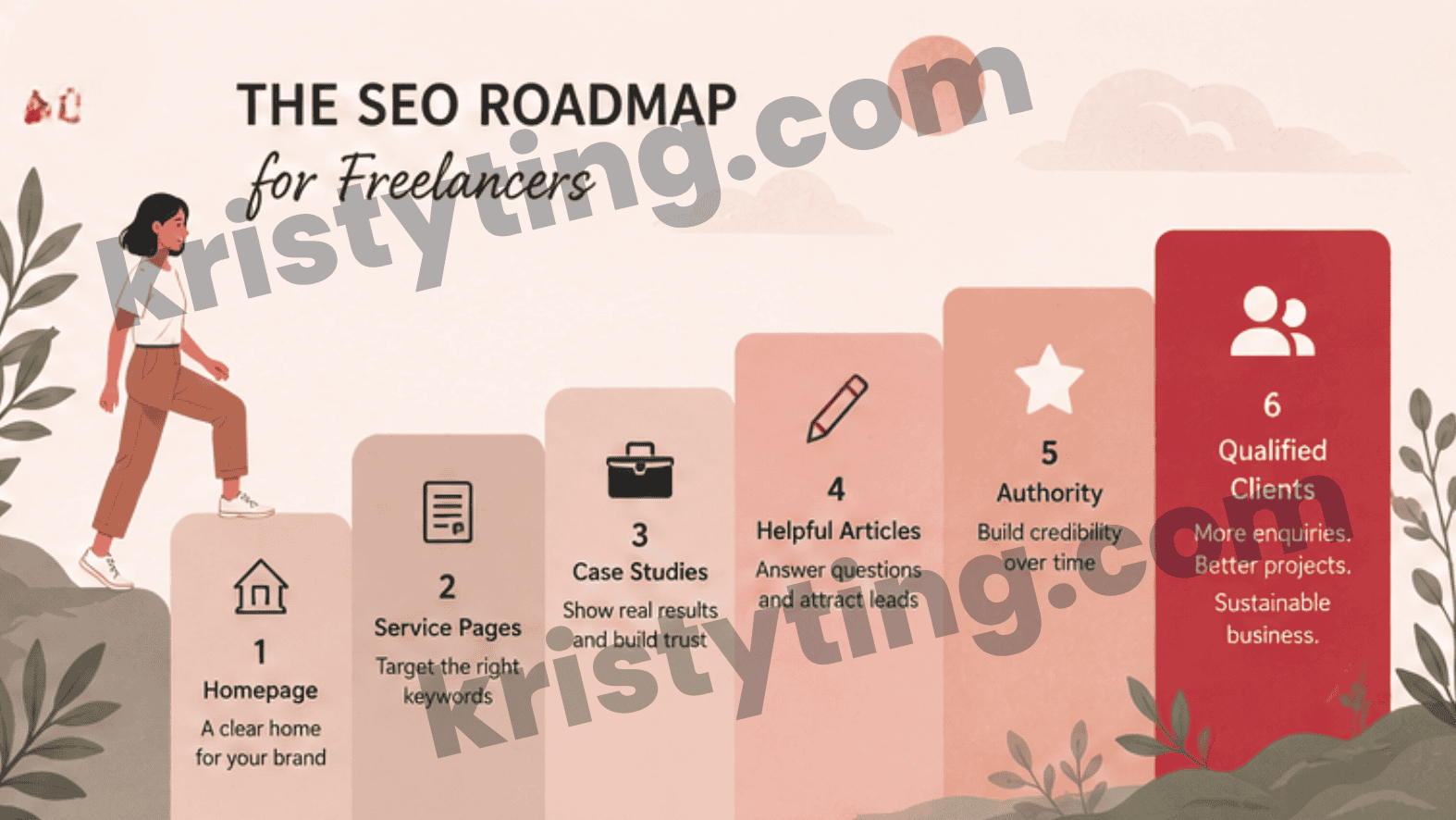
If you want a practical starting point, keep it focused. Build or improve your homepage. Create strong pages for each core service. Add two to four case studies or portfolio pages with real detail. Then publish a handful of articles based on buyer questions and niche-specific keywords.
After that, track what gets impressions, clicks, and inquiries. Double down on the pages that show promise. Update weak pages instead of endlessly creating new ones. SEO rewards consistency, but it also rewards patience and refinement.
If your freelance business already gets referrals or social traffic, even better. SEO does not need to replace those channels. It can strengthen them and give you one more way to attract leads without being online 24/7.
A good freelance business should not rely on panic marketing. SEO gives you a quieter, steadier foundation, and that kind of leverage is worth building one page at a time.
If you’re planning to use SEO to grow your freelance business, these are two tools worth exploring:
- RankIQ: Great for finding low-competition keywords and creating better SEO content briefs.
- Koala AI Writer: Helps speed up research and first drafts, while still allowing you to add your own expertise and editing.