
This post may contain affiliate links. If you use these links to buy something we may earn a commission at no extra cost to you. Thank you for your support!
A business owner does not hire a Google Ads freelancer because their Canva template looks pretty. They hire the person who makes them believe, within a few minutes, that their ad budget will be handled thoughtfully. Your google ads freelancer portfolio needs to create that confidence before the discovery call.
That is good news if you are newer to Pay-Per-Click (PPC) advertising, which is a type of online advertising where advertisers typically pay each time someone clicks on their advertisement. You do not need a decade of agency experience or a folder full of household-name brands to build something persuasive. You need proof of your thinking, a clear niche or offer, and case studies that connect campaign work to business outcomes.
1. What a Google Ads freelancer portfolio needs to prove
A portfolio is not a resume pasted onto a web page. It is a sales asset. Every section should answer the questions running through a prospective client’s mind: Do you understand businesses like mine? Can you make sound decisions with my money? What exactly will you do? And can you explain performance without hiding behind marketing jargon?
For Google Ads services, your portfolio should demonstrate four things: strategic judgment, technical ability, commercial awareness, and communication. Screenshots of a dashboard may support your case, but screenshots alone do not prove any of those things.
| Portfolio element | What the client wants to know | What to include |
| Positioning statement | Is this freelancer right for my business? | Your audience, campaign types, and the outcome you help pursue |
| Case study | Have they produced meaningful results? | Context, goal, actions, metrics, and business impact |
| Process | Will working with them be organized? | Audit, build, launch, optimization, and reporting steps |
| Service offer | What am I paying for? | Scope, deliverables, communication rhythm, and starting investment |
| Proof of expertise | Do they know the platform? | Certifications, testimonials, sample audits, or campaign walkthroughs |
The goal is not to claim that you can guarantee revenue. No ethical PPC professional can promise results when landing pages, pricing, sales teams, inventory, and seasonality all affect the final outcome. The goal is to show that you know how to improve the inputs you control.
2. Pick a clear angle before adding case studies
“I run Google Ads for everyone” sounds flexible, but it makes it harder for a client to see why they should choose you. A focused angle gives your portfolio a stronger point of view.
You might specialize in lead generation for local service businesses, ecommerce Shopping campaigns, search campaigns for coaches and consultants, or Google Ads account audits for companies already spending but not seeing enough qualified leads. You can also position around a capability, such as conversion tracking cleanup, Performance Max management, or landing page and ad-message alignment.
You do not have to turn down every client outside your niche. A focused Google Ads freelancer portfolio does not lock you into one niche. It simply gives clients a clear reason to start the conversation. Your portfolio simply needs a memorable front door. A freelance Google Ads specialist for dental clinics, for example, can speak directly about call tracking, location targeting, high-intent treatment keywords, and lead quality. That feels more credible than broad claims about helping businesses grow.
Make your opening statement outcome-led
Lead with a short statement that combines who you serve, the work you do, and the business result you aim to support. For example:
> I help established home service businesses turn Google Search demand into more qualified calls through tightly managed, trackable campaigns.
Notice the wording. It does not promise an exact number of leads. It communicates a specific service, a specific audience, and a sensible outcome. That is the kind of positioning clients can understand fast.
3. Build case studies clients can actually trust
The strongest part of a Google Ads freelancer portfolio is usually three to five focused case studies. If you have managed large accounts, feature your best-fit projects rather than every account you have touched. If you are new, two well-documented projects are more useful than ten vague examples.
Each case study should read like a compact business story. Start with the situation: what was happening before you arrived? Then explain the goal and constraints. Maybe the client had plenty of clicks but poor-quality form submissions. Maybe tracking was broken, budgets were spread across irrelevant keywords, or a seasonal business needed to fill appointment slots before a slow period.
Next, explain what you changed. Be specific enough to demonstrate skill: rebuilt keyword themes, added negative keywords, separated branded and non-branded spend, improved conversion actions, introduced call tracking, rewrote ad copy around the highest-value service, or shifted budget toward locations with stronger close rates.
Finish with the result, using the metrics that match the client’s real goal. A lower cost per click is not automatically a win if leads became worse. Likewise, a higher cost per lead may be perfectly acceptable when those leads lead to larger contracts.
| If the client wants… | Prioritize these portfolio metrics |
| Local service leads | Qualified calls, booked jobs, cost per qualified lead, conversion rate |
| Ecommerce sales | Revenue, return on ad spend, conversion value, average order value |
| B2B pipeline | Demo requests, sales-qualified leads, pipeline value, cost per opportunity |
| Awareness for a new offer | Impression share, engaged visits, branded search lift, assisted conversions |
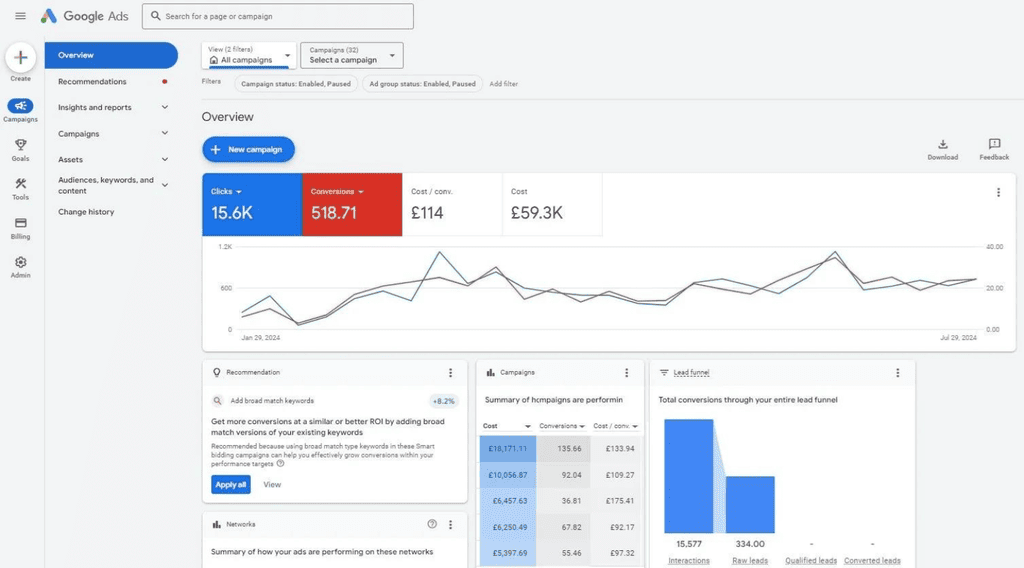
Use percentage changes when confidentiality matters. Canva Pro works well for this when you want to turn blurred dashboard screenshots and before-and-after percentages into clean, branded case study graphics. You can write that you reduced cost per qualified lead by 28% over 90 days, without exposing the client’s exact ad spend. Ask for permission before sharing account screenshots, recognizable business names, or detailed revenue data.
If you do not have client results yet
Do not invent them. Made-up results can damage your reputation before your freelance business even gets momentum. If you’re starting from scratch, you can also follow my guide on building a freelance portfolio without experience to create convincing samples before landing your first paying client.
Instead, create evidence of your ability in honest ways. Complete a sample account audit using a public brand or a fictional business and label it clearly as a practice project. Build a campaign strategy for a local business you understand, including keyword research, sample ads, negative keyword ideas, budget logic, conversion tracking recommendations, and a landing page critique. You can also offer a limited beta project to a real business at a reduced rate in exchange for permission to create an anonymized case study.
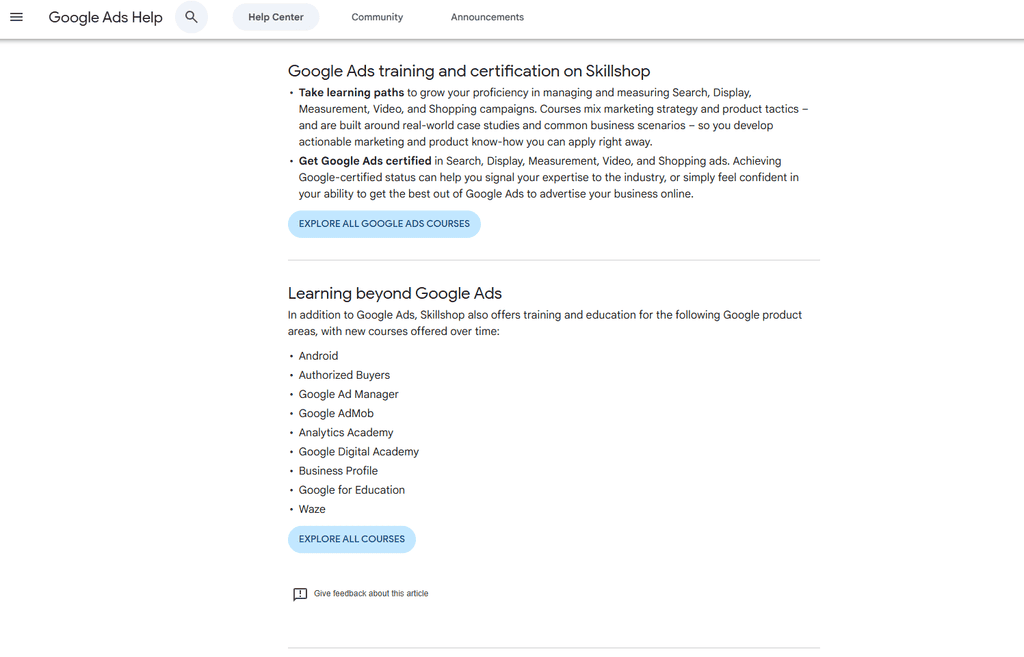
You can also strengthen your portfolio with a Google Ads certification. Certification won’t replace real campaign results, but it gives prospective clients another way to assess your platform knowledge.
A thoughtful practice project will not replace real results forever, but it can get you the first conversation. Once you land a client, make documentation part of your workflow from day one.
4. Show the work behind the result
Clients who have been burned by freelancers are often wary of vague monthly management promises. Your portfolio can lower that anxiety by showing what your service looks like after they say yes.
Outline your method in plain English. For example, an initial Google Ads engagement may begin with account access, tracking verification, offer and competitor research, search term analysis, campaign restructuring, and a measurement plan. Ongoing management might include search-term reviews, bid and budget adjustments, ad testing, landing page feedback, and a monthly reporting call.
This also protects you from scope creep. A client can see whether your offer includes campaign management only or whether it also includes copywriting, landing page design, CRM setup, creative production, and sales follow-up support. Those services can be valuable, but they should be priced and scoped deliberately.
5. Give your services a clear next step
A portfolio that ends with “contact me” leaves too much work for the reader. Offer a simple, relevant path forward. For a lower-budget business, that may be a paid account audit. For companies ready to invest, it may be a setup and management package. For an established account, it could be a performance review before they commit to a longer retainer. Systeme IO works well for this if you want a simple offer page with a booking form and no coding.
You do not need to publish every rate, especially if ad spend, tracking complexity, and campaign count vary widely. But stating a starting investment can filter out poor-fit inquiries and help serious prospects self-qualify.
| Offer type | Best for | Typical scope |
| Google Ads audit | Businesses with an existing account | Tracking review, waste analysis, priorities, and action plan |
| Campaign setup | New advertisers or new offers | Research, account build, conversion setup, ads, and launch support |
| Monthly management | Businesses with consistent ad spend | Optimization, reporting, testing, and strategic recommendations |
| Audit plus implementation | Owners who want a reset without a long retainer | Audit findings applied over a defined project period |
6. Keep the presentation simple and easy to scan
Your portfolio can live on a simple website, a polished PDF, or a well-organized Notion page. The platform matters less than clarity. Use clear headings, short paragraphs, readable charts, and screenshots only when they add context. Blur sensitive information and add a caption explaining what the reader is looking at.
Before you publish, read every page through a buyer’s lens. Remove broad claims such as “results-driven expert” unless you immediately show the proof. Replace platform-heavy language with business language. A restaurant owner cares less that you used a specific bidding strategy than that you understood which reservations were profitable and how to measure them. Ask a business owner who has never run ads to review your Google Ads freelancer portfolio and tell you what they would do next.
Your portfolio will improve with every account you manage, every client conversation you have, and every result you learn to interpret. Publish the version you can stand behind now, then treat it as a living sales tool. The skill you are building is bigger than one portfolio: it is the ability to turn your marketing knowledge into trust, better clients, and work you can take with you from anywhere.