

This post may contain affiliate links. If you use these links to buy something we may earn a commission at no extra cost to you. Thank you for your support!
A lot of freelancers say they offer SEO, but when a client asks what they actually do beyond fixing title tags and blog posts, the room goes a bit quiet. That gap is exactly where off page SEO services become valuable. They sit outside the client’s website, but they directly affect rankings, authority, visibility, and in many cases, sales.
If you want a service that feels more strategic than basic content writing and more accessible than full technical SEO, this is a strong lane. It works for solo freelancers, consultants, and small agencies because businesses understand the outcome. They want better rankings, stronger trust signals, and links that help them compete.
What off page SEO services actually include

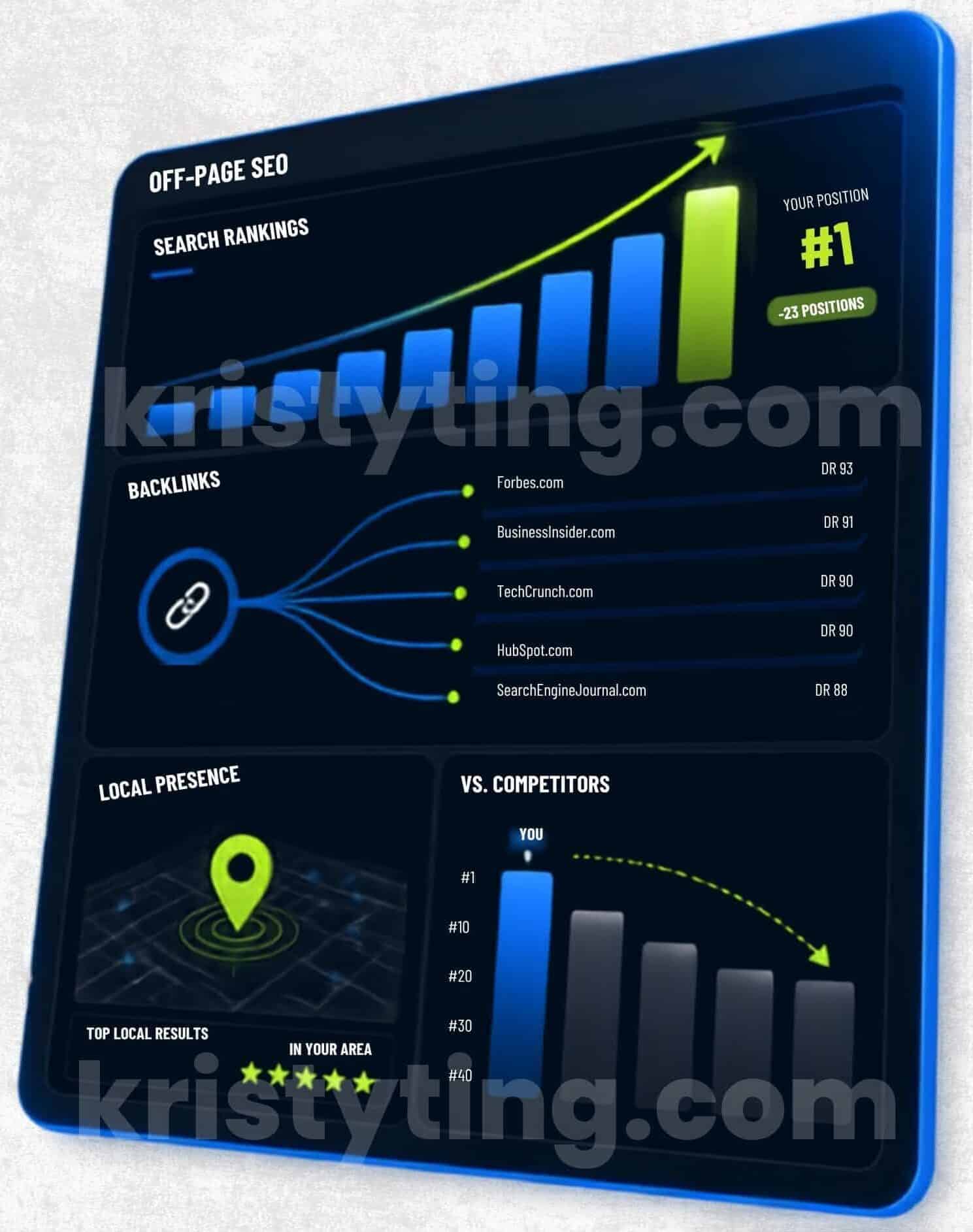
Off-page SEO is any work done outside a website to improve its search performance and brand authority. Most people reduce it to link building, but that is only part of the picture. A serious off-page offer can include backlink outreach, digital PR, citation building, brand mention campaigns, local SEO signals, review generation, partnership placements, podcast outreach, HARO-style media pitching, and competitor backlink analysis.
The reason clients pay well for this work is simple. On-page SEO can make a site easier for Google to understand, but off-page signals help search engines decide whether the site deserves trust. If two websites publish similar content, the one with stronger authority often wins.
That said, this is not magic. A weak site with poor offers, slow pages, and thin content will not suddenly rank because you built a few backlinks. Off page SEO services work best when they support a decent website, a real business, and content that deserves visibility.
Why off page SEO services are attractive for freelancers
This offer sits in a sweet spot. It is specialized enough to command better pricing, but it does not require you to be a developer. If you already have skills in writing, outreach, research, PR, content strategy, or client communication, you are closer than you think.
There is also strong recurring revenue potential. Clients rarely want a one-time backlink push and then disappear. They usually need ongoing authority building, outreach, reporting, and relationship development over several months. That means you can package this as a monthly retainer instead of constantly chasing one-off projects.
For freelancers who want to grow into an agency model later, off-page work is also easier to delegate than many people expect. Outreach, prospecting, list building, follow-ups, and reporting can become standard operating procedures. You still need quality control, of course, but it is a service that can scale if you build the right process.
The biggest mistake freelancers make with this offer
They sell backlinks instead of business outcomes.
Clients do not wake up excited to buy ten guest posts or fifty directory listings. They want more qualified traffic, more visibility for money pages, stronger local presence, better rankings against competitors, and a brand that looks established. If your pitch sounds like a menu of SEO tasks, you will attract bargain hunters. If your pitch connects off-page work to revenue and growth, you will attract better-fit clients.
This matters even more because the SEO industry has trust issues. Plenty of business owners have already paid for spammy links, automated outreach, and reports full of vanity metrics. So your positioning needs to be clean and grown-up. Explain your method, explain your standards, and explain what you will not do.
What to offer instead of a vague link-building package
The best off page SEO services are productized enough to feel clear, but flexible enough to fit the client’s market.
A local business might need citation cleanup, local link outreach, review generation support, and partnerships with local publications. A SaaS company may need digital PR, thought leadership placement, unlinked brand mention reclamation, and content-led link building. An e-commerce brand may benefit from creator partnerships, gift guide placements, affiliate relationship management, and category page backlink campaigns.
This is where many freelancers can stand out. Do not sell the same package to every industry. Sell a framework with a customized execution plan.
A strong offer usually includes strategy, prospecting, outreach, placement management, and reporting. Some freelancers also include anchor text planning, target page mapping, and competitor gap analysis. If you can explain how each piece supports rankings and authority, clients are far more likely to stay.
How to price off page SEO services without undercharging

Cheap link building is everywhere, so if you try to compete on price, wah, very fast you will end up with low margins and high stress.
Pricing should reflect difficulty, not just deliverables. A link from a relevant industry publication is harder to earn than a basic directory citation. Local outreach in one city is different from national digital PR. B2B niches with strict editorial standards take more time than broad lifestyle markets.
For freelancers, monthly retainers usually make the most sense. You are managing a process, not delivering a guaranteed ranking. Entry-level retainers might start around a few hundred dollars for local citation and outreach support, while authority-building campaigns for competitive niches can move into the low to mid four figures monthly. Agencies and highly specialized consultants can go much higher.
If you are newer, avoid promising a specific number of links unless you are very confident in your system. Promise activity, standards, targeting, and reporting instead. You can still set goals, but tie them to realistic conditions. Off-page SEO depends on approvals, editorial decisions, competitor activity, and the quality of the site you are promoting.
What clients care about most
Clients care about relevance, quality, and trust. They want links and mentions that make sense for their industry, not random placements on sites with inflated metrics. They also want to know that you are not risking their domain with manipulative tactics.
This is why your process matters so much in sales conversations. Walk them through how you research prospects, evaluate websites, personalize outreach, and track results. Show examples if you have them. If you do not have client examples yet, use a sample campaign. Build a mock outreach list for a niche business and explain your thinking.
You do not need to act like you control Google. In fact, you will sound more credible if you admit the trade-offs. Some high-authority sites are harder to win. Some niches have fewer link opportunities. Some campaigns create brand visibility before they create ranking movement. Good clients appreciate honesty.
Skills you need to deliver this well
The technical side of off-page SEO matters, but this is also a people skill business.
You need research skills to find realistic opportunities, writing skills to pitch editors and partners, judgment to avoid junk placements, and analytical skills to report on progress. Relationship building helps too. The best outreach does not feel mass-produced. It feels like a relevant opportunity presented to the right person.
If you already come from copywriting, content marketing, PR, virtual assistance, or account management, you may have a head start. You are not learning from zero. You are just applying your existing skills to a search-focused result.
For more advanced freelancers, the upgrade is strategic thinking. Instead of simply building links, you start identifying which pages deserve authority, which content assets are link-worthy, which competitors are vulnerable, and where the client can earn visibility others are missing.
How to position yourself in a crowded market

Generic SEO freelancers are easy to replace. Specialists are not.
One smart move is to niche by client type. You can offer off page SEO services for local service businesses, SaaS brands, e-commerce stores, coaches, B2B companies, or media brands. Another option is to niche by method, such as digital PR, local citations, podcast outreach, or authority link campaigns.
When your positioning is specific, your content becomes easier to create, your case studies become stronger, and your referrals improve. Clients want the person who understands their world. Not just someone who knows SEO terms.
You can also pair this service with complementary offers. Off-page SEO fits well with content strategy, blog writing, local SEO, conversion copywriting, and lead generation. That combination makes you more valuable because authority without strong pages to rank is only half the job.
What results look realistic
This is not an overnight service. Most clients should expect momentum over months, not miracles in two weeks.
Some early wins may include increased referral traffic, new brand mentions, better indexing of target pages, improved local visibility, or movement for lower-competition keywords. Bigger ranking jumps often take longer, especially in tough industries. If a site has serious on-page or technical issues, off-page work may expose those limitations rather than solve them.
That does not make the service weaker. It makes it real. And real is what helps you keep clients longer.
The freelancers who win with this offer are usually the ones who combine ambition with restraint. They are confident about the value, but careful with promises. They know off-page SEO can move a business forward, but they also know quality beats volume every time.
If you are building a freelance offer that can grow with you, off page SEO services are worth serious attention. They reward strategy, communication, and consistency, which means this is not just another task-based service. It is a skill set you can own, sharpen, and turn into long-term income from anywhere.