This post may contain affiliate links. If you use these links to buy something we may earn a commission at no extra cost to you. Thank you for your support!
You can have a beautiful website, solid service, and real skills, then still wonder why inquiries are random and sales feel lemah. That is where the sales funnel versus website question becomes more than a marketing debate. For freelancers, coaches, and service providers, the right setup affects how fast you get leads, how clearly you position your offer, and how much manual follow-up you need to do.
A lot of people treat a traditional website and an online sales funnel as if one must replace the other. Usually, that is the wrong frame. Both play a critical role in a successful business. They serve different purposes, work best with different types of traffic, and support different business objectives. If you understand the key differences, you can stop copying what big brands do and build something that actually fits your business model and your current stage.
This comprehensive guide takes a closer look at both, walks through when each makes sense, and gives you a clear path forward based on your actual situation.
Sales Funnel versus Website: What Is the Main Difference?
Before taking sides, it helps to understand what each one actually is — and what job it is built to do.
What Is a Traditional Website?
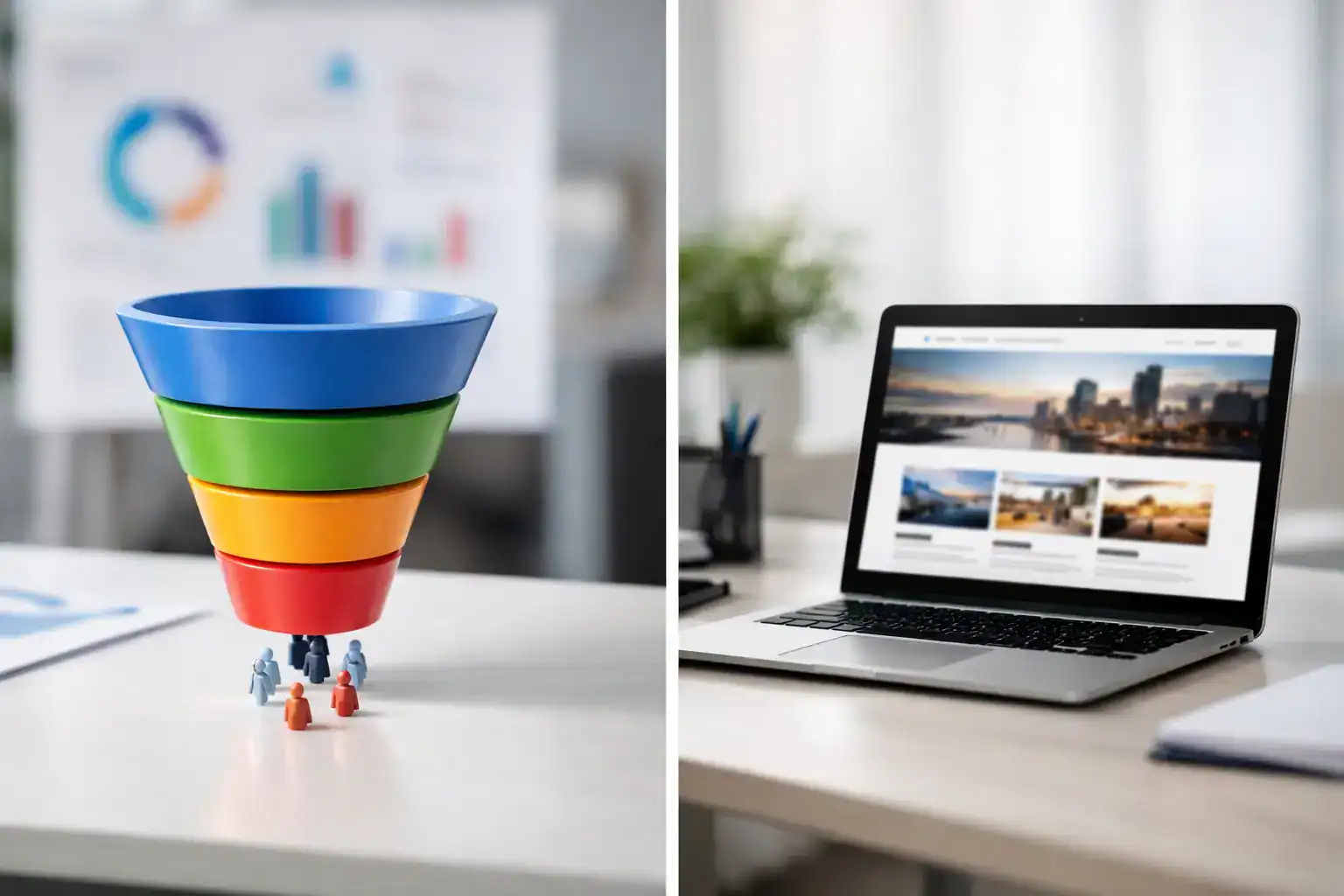
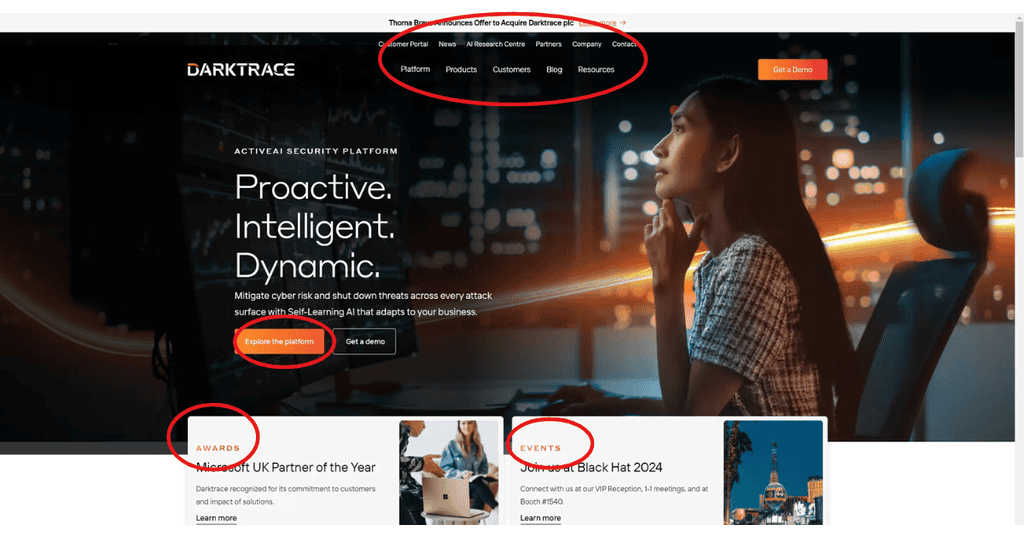
A traditional website is a collection of web pages hosted on a web server, designed to serve as your digital storefront and online home base. It gives visitors options. They can read your About page, check your services, browse your portfolio, read your blog posts, look at case studies, and maybe send an inquiry through your contact form.
Think of it as a versatile tool. A website is not built around one specific action — it is built around your entire online presence. It answers questions like: Who are you? What do you offer? Why should I trust you? What should I do next?
A well-built, user-friendly website supports your online business over a long time. It is the best approach for building organic traffic through search engine optimization, establishing credibility with a wide audience, and giving potential customers a place to explore before they reach out.
What Is an Online Sales Funnel?
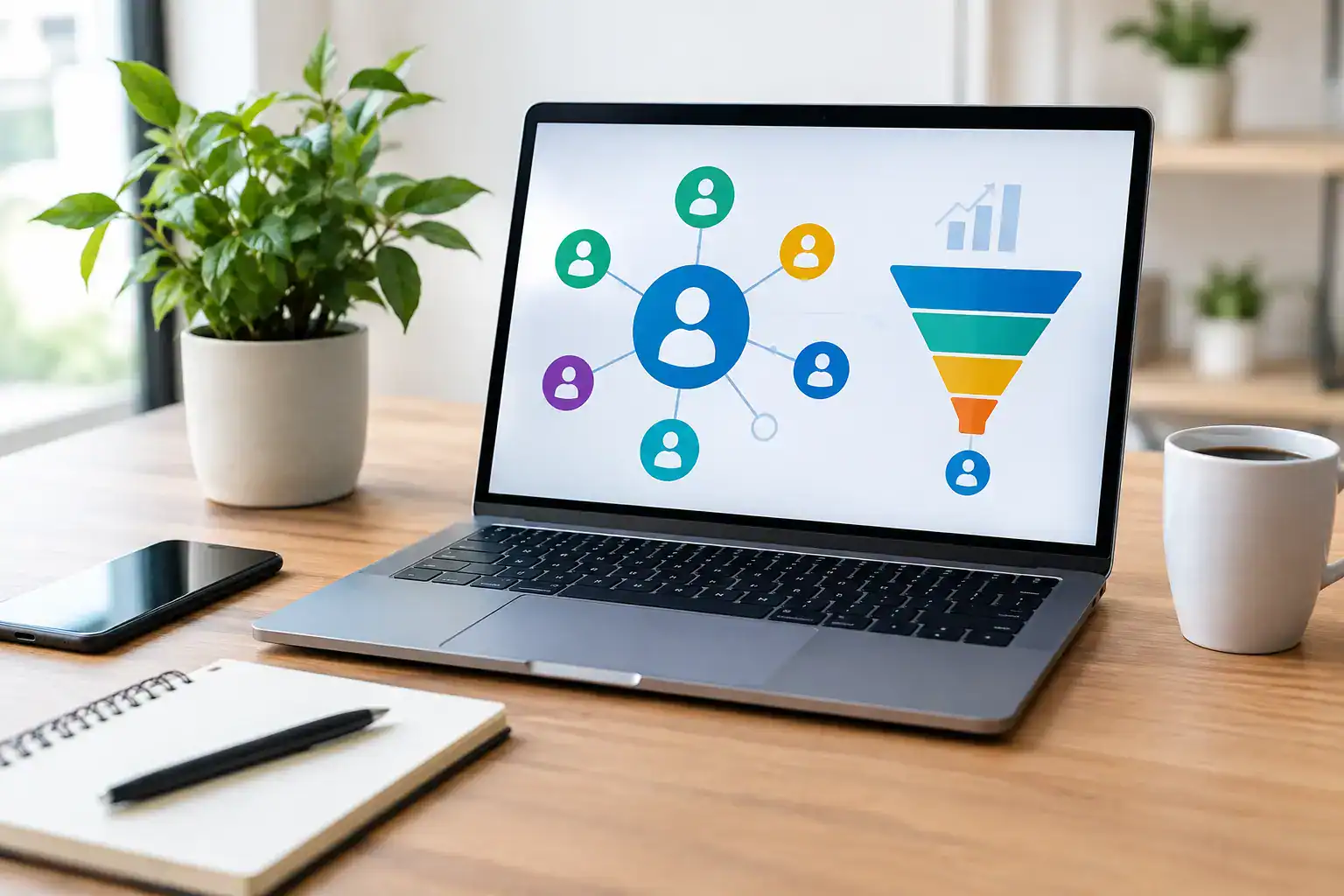
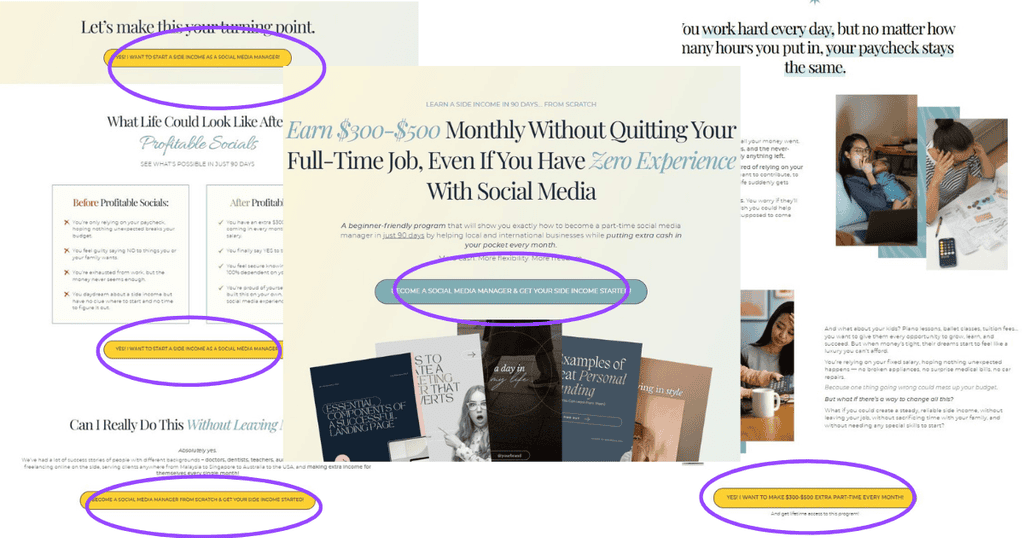
An online sales funnel is a step-by-step process designed around one specific goal. That goal might be booking a call, downloading a lead magnet, joining a webinar, buying a mini offer, or applying for a service. Instead of giving website visitors ten different pages to explore, a funnel narrows the path and moves potential customers through a series of steps — each one designed to bring them closer to a specific action.
The purpose of a sales funnel is focused conversion. Top of the funnel attracts attention. The middle stages build trust and desire. The bottom stage asks for the sale or the commitment. Every stage of the funnel has one job, and every page leads to one clear next step.
A normal funnel for a service provider might look like this: a sleek landing page with a free guide or free trial offer, an email sequence that delivers valuable content, a sales page for the core offer, and a checkout page with an optional upsell. That is the sales process automated — without a sales team needed at every touchpoint.
Sales Funnel Versus Website: Key Differences at a Glance
Here is a side-by-side look at how a traditional website and an online sales funnel compare across the metrics that matter most for freelancers and small businesses:
| Traditional Website | Online Sales Funnel | |
| Purpose | Exploration and brand presence | Focused conversion toward one specific goal |
| Structure | Collection of web pages with navigation | Series of steps with one path forward |
| Best for | Organic traffic, credibility, multiple offers | Paid traffic, launches, single campaign goal |
| User experience | Freedom to explore different pages | Directed toward one clear next step |
| Traffic source | Search engines, referrals, content marketing | Social media ads, email, direct campaigns |
| Conversion focus | Broad — contact form, inquiry, discovery | Narrow — one specific action per stage |
The good news is that understanding these key differences is what allows you to make a smart move — rather than spending a lot of time and money on the wrong asset for your current stage.
The Purpose of a Website: When a Traditional Website Wins
If you are a freelancer selling custom services, a traditional website often gives you the kind of online presence that makes potential consumers take you seriously. It gives potential customers a place to vet you before they reach out — and that vetting process plays a critical role in high-ticket or relationship-based service businesses like copywriting, design, search engine optimization, ads management, web design, and consulting.
A well-built website helps in three big ways:
First, it supports trust. Potential customers want to know who you are, what you do, what results you get, and whether you are credible. A website with clear messaging, case studies, testimonials, and valuable information does that job better than any single landing page can.
Second, it works well for organic traffic. If you create blog posts, rank on search engines, or want human beings to find you through service-specific content marketing, a website is the better structure. A blog page full of valuable content compounds over a long time — which is one of the biggest benefits of investing in a content-led website early.
Third, it supports multiple offers and different pages for different audiences. If you do more than one thing, a user-friendly website can organize your services without forcing every website visitor down the same path. Different pages for different purposes — service pages, a portfolio section, a blog page, a contact form — all serve your wide audience without confusion.
This is why many freelancers need a website earlier than they think. Not a massive five-month project. Just a clean, strategic digital storefront with clear messaging, proof of your work, and an easy clear next step.
Where Websites Fall Short
Websites have a weakness too. They can become brochure-style — beautiful to look at, not great at generating leads or driving specific actions. If your homepage says a bit of everything and your menu has twelve links, website visitors wander. Then they leave. Automating your lead follow-up helps here!
A traditional website without a sales strategy is just an expensive business card. If there is no lead magnet, no lead capture forms collecting email addresses, no clear call to action on each page, and no clear path from “I found you” to “I want to work with you” — the website is doing less work than it should. Best practices in digital marketing call for every page to have a main goal and a single clear next step.
The Purpose of a Sales Funnel: When an Online Sales Funnel Wins
Funnels shine when you want a focused outcome. If you are promoting one offer, running paid social media traffic, launching a workshop, selling online courses, building an online store for digital products, or generating leads for follow-up, an online sales funnel usually outperforms a standard website page.
Why? Because funnels reduce decision fatigue. One set of steps leads to one next step. No clutter, no guessing, no “let me check your blog page and never return.” That simplicity can boost conversions fast — especially when the traffic source is warm and the campaign’s goal is specific.
Real-World Examples of the AIDA Framework in a Funnel
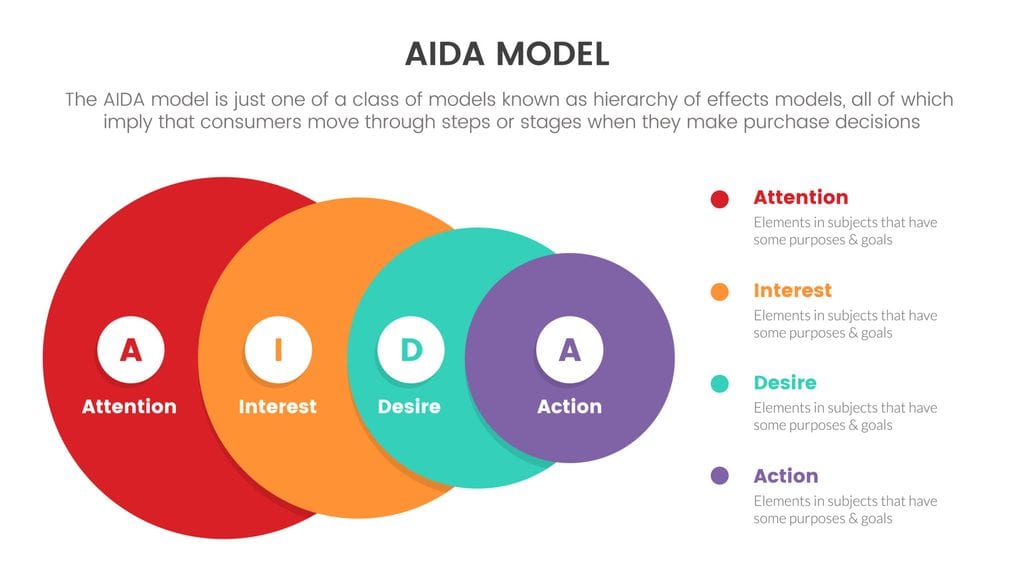
Take a closer look at how different service providers use an online sales funnel in practice:
- A freelance email marketer selling an email audit uses a funnel to move potential customers from a high-converting landing page to a checkout to an upsell — in a way a normal website rarely does.
- A coach booking discovery calls uses a funnel to pre-qualify leads through lead capture forms, answer objections through valuable content, and direct only serious people to a phone call or calendar link.
- A virtual assistant with a free guide as a lead magnet uses a funnel to collect email addresses, nurture leads through an automated email sequence, and convert them into retainer clients — without manual follow-up at every stage of the funnel.
- An online course creator selling a $97 program uses a funnel with a free trial or a low-ticket front-end offer, a sales page for the main course, and an order bump for additional resources.
In each of these cases, the funnel is doing what a collection of pages cannot: it is guiding human beings through a specific series of steps toward one desired action, without distraction.
Where Funnels Fall Short
Funnels are not magic. A bad offer inside a funnel is still a bad offer. And some business owners hide behind the best sales funnel builder and the sleekest landing page builder when the real issue is unclear positioning or an audience that does not yet trust them.
Funnels also require more technical skills upfront — setting up lead capture forms, connecting email sequences, configuring a landing page builder, running A/B test (b test) experiments on headlines and CTAs, and making sure the user experience across every step is seamless. If those pieces are not set up correctly, a funnel can underperform even with good traffic coming in.
And unlike a traditional website, a funnel built around one specific campaign goal has a shorter shelf life. When the offer changes or the campaign ends, the funnel usually needs rebuilding. That makes funnels a higher-maintenance asset than a well-structured website.
The Real Trade-Off: Flexibility Versus Focus
When you strip away the technical debate, the sales funnel versus website question comes down to one core trade-off: flexibility versus focus.
A traditional website gives website visitors freedom. That is good if potential customers need context, comparison, or reassurance before they trust you enough to take action. It is less good if you want a fast decision from cold traffic.
An online sales funnel gives visitors direction. That is good if you want specific actions taken now, in a particular order, without distraction. It is less good if the buyer needs to explore before trusting you — because a funnel with no room to breathe can feel pushy to someone who just discovered you five minutes ago.
This is why service providers often struggle when they copy e-commerce and online store tactics. A funnel built for impulse purchases does not always fit a custom $2,000 or $5,000 service where the sales process involves multiple touchpoints and relationship-building over a long time. On the flip side, a service provider with only a general website may miss easy conversions because every lead has to figure things out on their own, with no clear path guiding them forward.
The Traffic Question
There is also the traffic question — and this is where the best approach often becomes obvious.
Organic traffic from search engines behaves differently from ad traffic coming in from social media or a paid campaign. Search engine optimization visitors often want options and valuable information before they commit. Ad traffic usually needs a strong, direct path – they clicked a specific promise and they want the next step immediately.
If your lead source is mostly search engines and content marketing, your traditional website matters more. If your lead source is mostly paid social media, launches, email campaigns, or digital marketing pushes around one offer, an online sales funnel becomes much more valuable.
The best practice is to match your asset to your traffic source – not to pick one and force all your traffic through it regardless of where it came from.
Do Freelancers Need Both a Website and a Funnel?
Very often, yes. And that is actually the good news — because you do not have to choose.
A traditional website builds your brand’s online presence over a long time. An online sales funnel drives a specific conversion event around one campaign’s goal. Used together, they make your online business feel both trustworthy and efficient.
Think of your website as your digital storefront — your home base that shows the full picture of who you are and what you offer. Think of your funnel as your best sales process — the one that guides a potential customer toward a single decision without distraction.
This combination works especially well for freelancers who are moving beyond random referrals. If you want more predictable leads, you need both online presence and conversion structure. Your website can attract through search engine optimization and validate through case studies and valuable content. Your funnel can capture email addresses through lead capture forms and close through a high-converting sales page.
Real Examples of Website Plus Funnel Working Together
Here is what that looks like in practice:
- A web designer uses a website to rank on search engines and show portfolio pieces. Then they use a funnel for a paid website audit or a discovery call campaign — sending social media or email traffic to a sleek landing page, not to their homepage.
- A copywriter has a site with niche service pages and samples for organic traffic. Then they run a funnel for a messaging workshop or email sequence package — with lead capture forms, a sales page, and an automated email follow-up sequence.
- An agency owner keeps the website for credibility and long-term content marketing. They send paid digital marketing traffic into a funnel that pre-qualifies leads through a series of steps before booking calls.
- An online course creator uses a blog page and search engine optimization to drive organic traffic to their website, then uses a funnel with a free guide lead magnet to collect email addresses and nurture subscribers into buying their online courses.
That is usually the smarter move than asking one asset to do everything — and it is one of the best practices for any successful business that sells services or digital products online.
Sales Funnel Versus Website: How to Choose Based on Your Current Business Stage
Rather than asking “which is better,” ask: “which is right for where I am right now?” Here is how to think through it based on your current stage.
If You Are Early-Stage and Offering Custom Services
Start with a lean, user-friendly website. You need credibility, clear service descriptions, and a simple inquiry path. A homepage, service page, about page, portfolio or proof section, and a contact form is enough for most people at this stage. Keep it simple, load it with valuable information, and make the clear next step obvious.
Do not build a complex online sales funnel before your offer is validated. The purpose of a funnel is to scale something that already works — not to figure out whether anyone wants it.
If You Already Have Traffic and a Converting Offer
Add a funnel. This is where digital marketing automation starts to make sense. Build it around one specific goal, one audience, one pain point, one call to action. Use a landing page builder to create high-converting landing pages for your campaign, set up lead capture forms to collect email addresses, and connect everything to an email sequence that nurtures leads toward the sale.
Run a b test on your headline and CTA once you have traffic. Small improvements to a high-converting landing page compound into significant revenue over a long time.
If You Sell Lower-Ticket Digital Products or Online Courses
A funnel may deserve more attention than your website. In this case, the traditional website can stay simple while the online sales funnel does the heavy lifting — with a lead page, a sales page, and a step-by-step process that moves potential customers from free guide to paid offer.
The best sales funnel builder options for this stage include ClickFunnels, GoHighLevel, and Systeme.io – each with different strengths depending on your technical skills, budget, and business model.
If You Rely Only on Referrals and Your Pipeline Is Inconsistent
The answer is not automatically “build a funnel.” First, take a closer look at whether your website clearly explains what you do, who you help, and what the clear next step is. Many conversion problems start there — not with the absence of a funnel, but with a website that gives website visitors no reason to take specific actions.
Fix the home base first. A user-friendly website with a clear contact form, strong case studies, and a lead magnet for collecting email addresses can do a lot of work before you need a full funnel.
If You Are Advanced, with Multiple Traffic Sources and Layered Offers
Run both intentionally. Your traditional website supports authority, content marketing, and long-term organic traffic from search engines. Your funnels support individual campaigns, specific actions, and digital marketing pushes around each offer. Different pages serve different purposes — and your job is to make sure each asset is matched to the right traffic source and business objective.
Common Mistakes Business Owners Make

Here are the most common mistakes small businesses and freelancers make when thinking about sales funnels and websites — and the best way to avoid them.
Building a Beautiful Website with No Sales Strategy
A beautiful website without a clear path from “I found you” to “I want to hire you” is just a digital brochure. Best practices say every page should have a main goal, a clear next step, and at least one mechanism for generating leads — whether that is a contact form, lead capture forms, or a lead magnet offer.
Building a Funnel Before the Offer Is Validated
A funnel is a scaling tool, not a discovery tool. If your offer is unclear, your target audience is undefined, or your messaging has not been tested yet, an online sales funnel will just amplify the problem. Validate first — even if that means closing your first few clients manually through a basic website or direct outreach.
Confusing a Landing Page with a Full Funnel
A lead page or a sleek landing page alone is not a funnel. A real online sales funnel includes the entire customer journey after the first click — the email follow-up, the booking logic, the sales page, the checkout, the upsell, and the lead nurturing sequence. A collection of pages without that connected step-by-step process is just a collection of pages.
Hiding Your Offer Behind Vague Branding
Too many freelancers bury their actual offer under a layer of aesthetic branding, mission statements, and values copy. If website visitors cannot tell in five seconds what you do, who you help, and what specific actions they should take next, your website is working against you. The user experience of “I found you, I understand you, I know what to do” should take under thirty seconds to deliver.
Choosing Based on What Looks More Professional
A simple website that gets inquiries is more professional than the best sales funnel builder setup that collects dust. Choose based on your business objectives, your traffic source, and the stage of the funnel your audience is at — not based on which one looks more impressive on someone else’s YouTube channel.
So, Sales Funnel versus Website: Which One Wins?

If your main goal is trust, online presence, and long-term organic traffic from search engines, the traditional website wins.
If your main goal is focused conversion for one campaign, one offer, or one specific action — the online sales funnel wins.
If your goal is to build a successful, sustainable online business that grows beyond word of mouth and random referrals, the real winner is using each asset for its proper job.
That may sound less exciting than picking sides, but it is far more profitable. The best approach is rarely the trendiest one. It is the one that matches your online presence needs, your traffic source, your offer maturity, and your business model.
Here is the smart move most people miss: you do not need the most complicated tech stack or the best sales funnel builder to earn well from your services. You need a clear path for the right potential customer — from “I just found you” to “I want to hire you.” Build that first, whether it lives on a traditional website, an online sales funnel, or both — and the sales funnel versus website debate resolves itself.
Your audience does not care whether you have a funnel or a website. They care whether you made it easy for them to understand what you offer and what to do next. Build for that. Everything else is just the vehicle.